
CONCRETE & OUTDOOR GUIDES
Stamped Concrete or Pavers: Which Patio Option Fits Your Priorities?
Compare stamped concrete and pavers by appearance, layout, upkeep, and the questions that clarify project scope. The right choice depends on how you plan to use the patio, the look you prefer, and the site conditions a provider can assess.
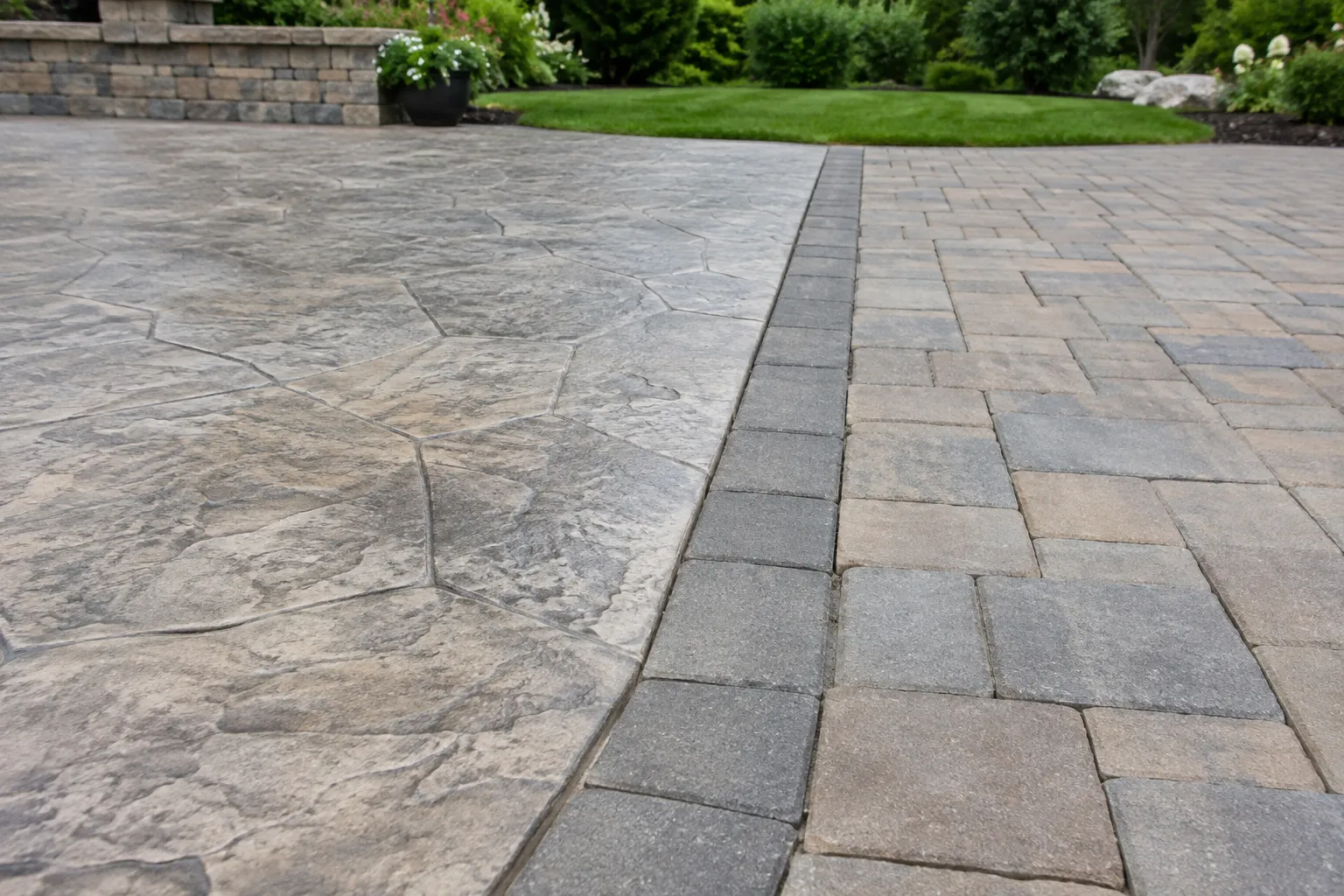
Stamped concrete and pavers can both create attractive patios, but they suit different priorities. Stamped concrete forms a continuous surface with a decorative pattern and color; pavers create a patio from individual units with visible joints. Consider the look you want, the shape of the space, how you expect to use it, and what maintenance you are comfortable discussing. Site preparation, drainage, transitions, and the proposed installation matter as much as the surface choice. Use the comparison below to narrow your preference, then ask a provider to explain the complete scope for your property.
How the surfaces differ
Stamped concrete is poured as a concrete surface and textured to create a pattern. Depending on the design, it can suggest the appearance of materials such as stone or brick while remaining one connected patio surface. Pattern, color, borders, and layout shape the finished look. Because the surface is continuous, joints and transitions should be discussed as part of the design rather than treated as afterthoughts.
Pavers are separate units arranged across a prepared area. Their individual shapes, colors, and laying patterns create a different visual character, and the joints between units remain part of the surface. The exact options depend on the paver product and the proposed installation. Neither approach is automatically the better choice: one may suit a preference for a unified decorative surface, while the other may appeal to someone who wants the distinct look of individual pieces.
| Decision point | Stamped concrete | Pavers |
|---|---|---|
| Overall appearance | A continuous concrete surface with a selected texture, pattern, and color. | Individual units with visible joints and a pattern created by their arrangement. |
| Design discussion | Ask about pattern, color, borders, and transitions to nearby surfaces. | Ask about unit style, laying pattern, edges, and how the joints are handled. |
| Care planning | Discuss cleaning and any sealer or maintenance guidance for the selected finish. | Ask what routine care the chosen units and joint system call for. |
| Scope to clarify | Preparation, layout, drainage, finish, and instructions after installation. | Preparation, base, edge details, drainage, and care of the installed system. |
Match the option to your priorities
Start with the visual effect you want from the house, not only a close-up sample. Look at the patio from the back door, the yard, and any adjoining path. Consider existing brick, stone, siding, and landscaping. A stamped pattern can be planned to complement those surroundings, but a color or texture should not be assumed to match another material exactly. Ask how the proposed finish will look across the full area and at its edges.
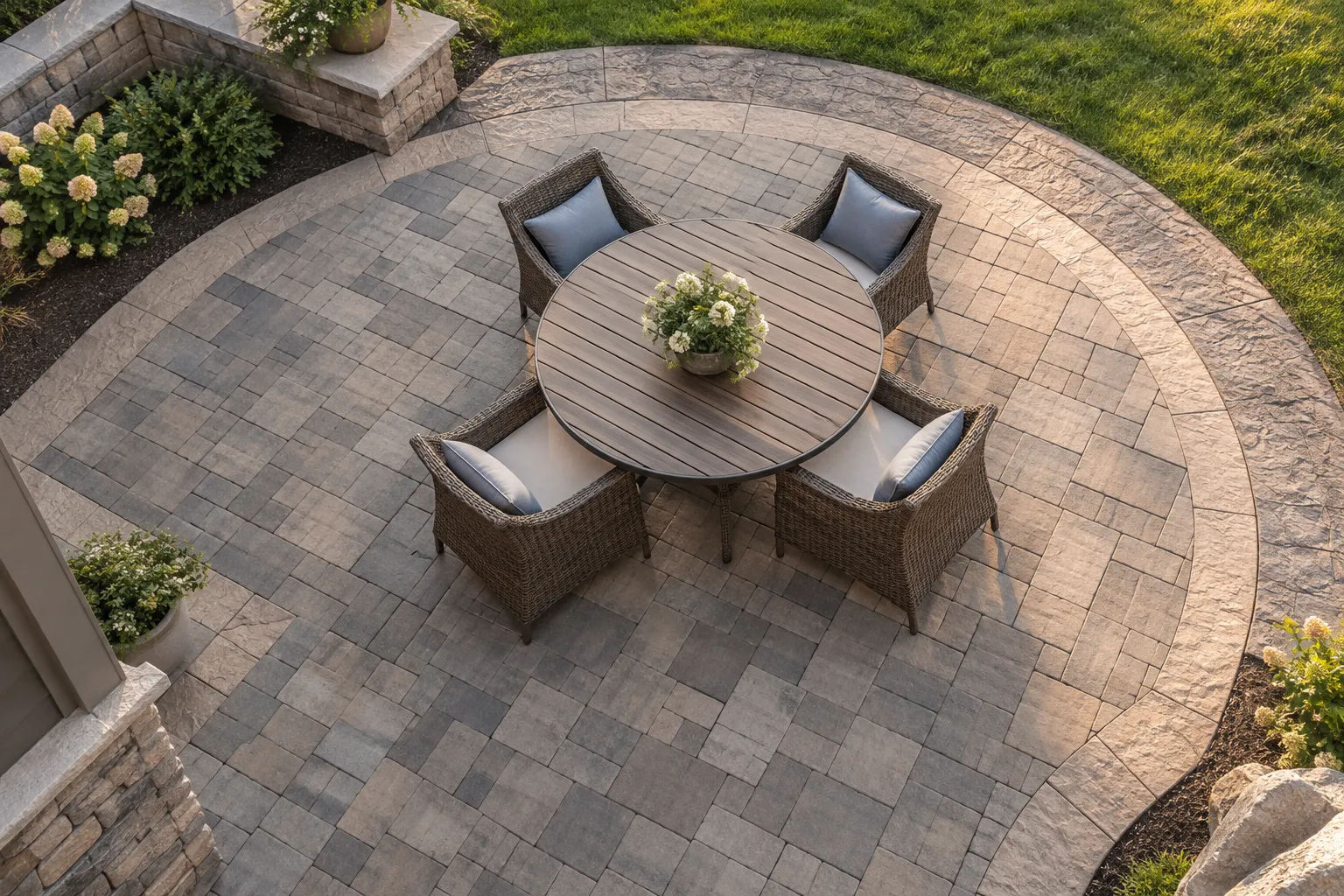
Next, think about how people will use the space. A dining table, lounge chairs, a grill, and a route to the lawn all need room in the layout. Marking approximate furniture positions on a simple sketch can reveal whether the patio needs a wider seating zone or a clearer path. This is an illustrative planning exercise, not a substitute for reviewing the actual site. Share the intended use so the proposed scope reflects it.
- Choose stamped concrete as a candidate if you prefer a continuous decorative surface and want to discuss pattern and color together.
- Consider pavers if the look of separate units and their visible joints is central to your preference.
- For either option, discuss how the patio meets the home, steps, walkways, lawn, and any existing hard surface.
A useful first decision is the appearance and layout you prefer; a site review helps determine what installation details need attention.
Compare upkeep without assuming a fixed schedule
Maintenance depends on the selected materials, installation details, exposure, and how the patio is used. For stamped concrete, ask what cleaning approach suits the finish and whether a sealer is part of the proposed system. If one is used, request product-specific guidance about care and future treatment rather than relying on a generic interval. The business’s service information also advises asking about the selected finish and sealer, since recommendations can vary.
For pavers, ask what routine cleaning is appropriate and how the installer expects the joints and edges to be maintained. The answer can depend on the particular units and installation. Do not assume every paver system has the same upkeep, or that one surface is maintenance-free. A provider should explain the care relevant to the materials included in the estimate and what signs would prompt a follow-up conversation.
- Ask which finish or paver product is proposed and what care instructions apply to it.
- Clarify whether a sealer or joint treatment is included, optional, or outside the quoted scope.
- Ask how sun, shade, water exposure, and everyday use affect the recommended care.
- Request written instructions for cleaning and any future maintenance before the work begins.
Plan the site and estimate conversation
For a stamped-concrete option, you can review the provider’s [stamped concrete service details](https://danyshomeprofessionals.com/services/stamped-concrete/) and use them to prepare questions about pattern, color, layout, access, and drainage. If you are also considering a larger concrete area, the scope may differ; compare it with the provider’s information on [concrete slabs and driveways](https://danyshomeprofessionals.com/services/concrete-slabs/). These pages describe service categories, not a determination of what your particular site requires.
- Write down the patio’s main purpose and the features you want to fit.
- Gather photos, approximate dimensions, and notes about existing surfaces or water concerns.
- Compare the proposed installation scope for each surface, not only the sample appearance.
- Ask which care instructions apply to the specific finish or paver system under consideration.
Common questions
Which option is easier to maintain?
There is no universal answer because care depends on the materials, installation, exposure, and use. For stamped concrete, ask about cleaning and any sealer associated with the selected finish. For pavers, ask about care for the units, joints, and edges. Request instructions specific to the proposed system and avoid assuming a fixed treatment schedule.
What should I bring to a patio estimate?
Bring approximate dimensions, photos from several angles, and a short description of how you want to use the space. Note existing surfaces, connections to the house or walkways, access constraints, and any water concerns you have observed. Ask the provider to explain preparation, finish or paver selection, transitions, drainage, what the estimate includes, and the care instructions for the proposed materials.